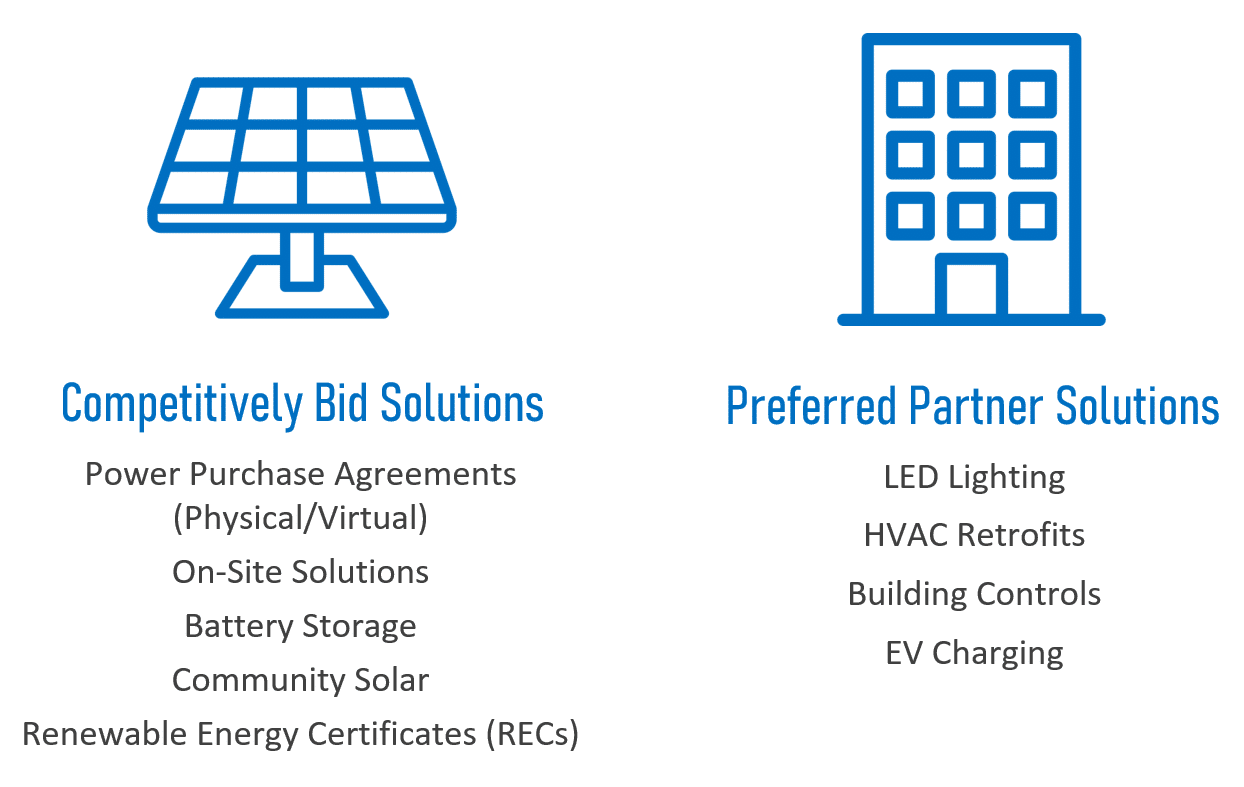
As your independent advisor, Tradition aligns with your sustainability goals, offering customized solutions that maximize your impact and achieve meaningful results.
With numerous renewable energy options available, it can be challenging to keep up with what’s available, how you can benefit and why you should consider it part of your integrated energy management strategy.
Whether you are currently prioritizing sustainability as a part of your holistic energy management program or if it is a strategy you are planning to explore in the future, Tradition Energy’s team of sustainability experts will be ready to guide you through the options.
+55 renewable providers compete for our client sustainability projects
Provider Vetting Criteria
Tradition consistently assesses potential sustainability partners through a meticulous vetting process, wherein each candidate is rigorously evaluated against a set of well-defined criteria:
Financial Stability
Tier 1 Equipment
Industry-Leading Warranties
Economic Analysis & Verification
Contact the Tradition Energy Sustainability Team at US.Sustainability@TraditionEnergy.com to discuss how we can help you achieve your sustainability goals!


 US: +1 (877) 51 POWER
  Europe: +44 (0) 207 198 1634